Introduction:
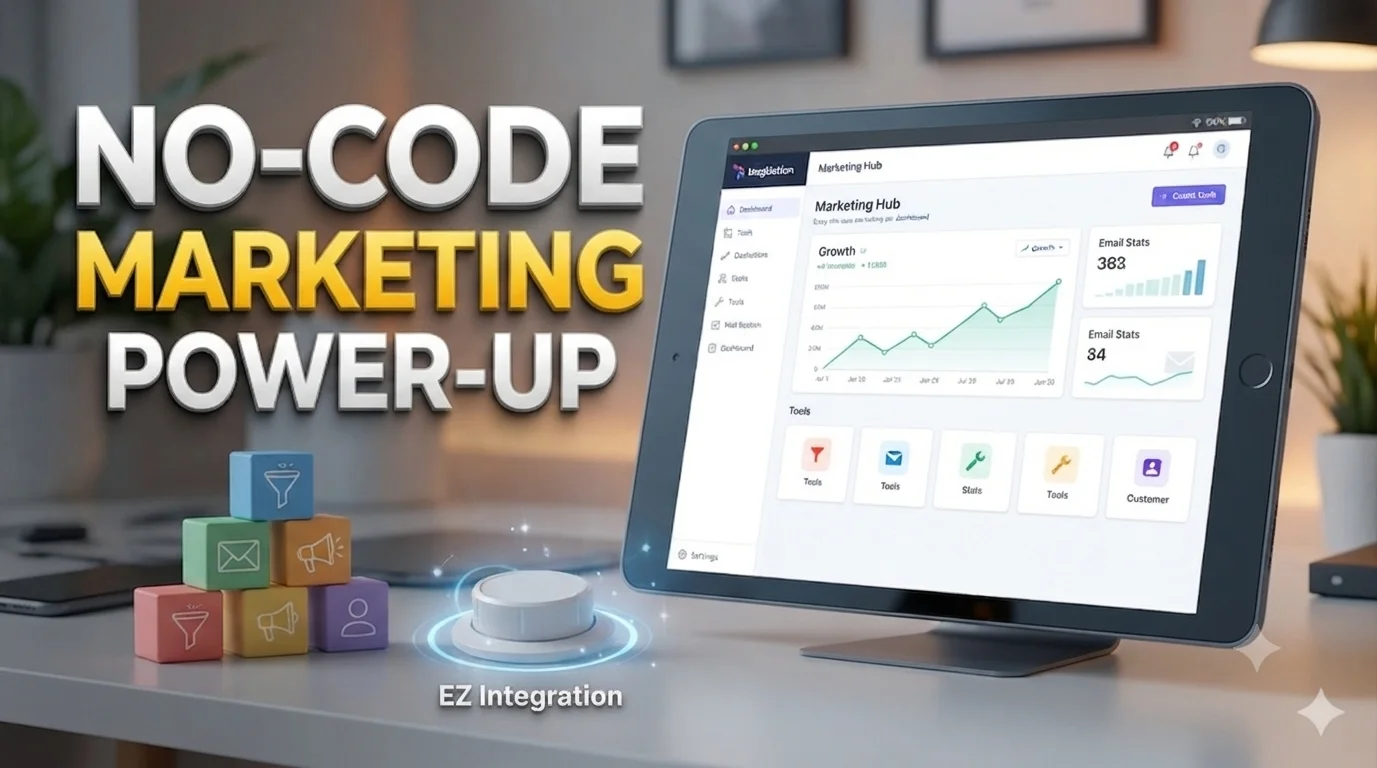
The democratizing of technology in 2026 has made it possible for marketers to build sophisticated tech stacks that once required a full team of software engineers. The shift toward “No-Code” and “Low-Code” platforms means that if you can understand the logic of a process, you can automate it.
Here is a discussion on the most effective ways to integrate advanced marketing tools without writing a single line of code:
1. Leverage Integration Platforms as a Service (iPaaS)
Tools like Zapier, Make (formerly Integromat), and Tray.io act as the “glue” of the internet. They use a simple “Trigger and Action” logic. For example, you can set a trigger so that when a new lead submits a form on your WordPress site, their data is automatically sent to your HubSpot CRM, a notification is posted in Slack, and they are added to a specific email sequence in Mailchimp. This creates a seamless flow of data across different platforms without needing custom API development.
2. Utilize Native “Deep” Integrations
Modern marketing tools are now built to talk to each other out of the box. Instead of building custom connections, look for tools that offer “Native Integrations.” For instance, Shopify and Google Analytics 4 (GA4) have a direct connection that allows you to track conversions and customer behavior by simply pasting a measurement ID into a box. Always check the “App Marketplace” of your primary platform first; usually, the integration you need is just a few clicks away.
3. Implement Visual Tag Management
In the past, adding tracking pixels for Meta (Facebook), LinkedIn, or Google Ads required manual code insertion into the website’s <head> tag. Tools like Google Tag Manager (GTM) allow you to manage all your tracking scripts through a visual interface. Once a developer adds the initial GTM code to your site once, you can add, remove, and test new marketing tags yourself without ever touching the website’s source code again.
4. Adopt Headless CMS with Pre-Built Frontends
As we discussed with Webflow and Headless WordPress, modern Content Management Systems often provide “Connectors.” You can manage your content in a backend and use a visual builder to display it. Many of these platforms offer “Plugins” or “Elements” that are pre-coded to integrate with advanced tools like Algolia for search or Stripe for payments, allowing you to drag and drop complex functionality onto your page.
5. Use AI-Powered “Wrapper” Tools
With the rise of Gemini and other AI models, there are now tools that can “read” your website and suggest integrations. Some platforms allow you to describe a workflow in plain English, for example, “Send me a weekly summary of my top-performing Google Ads” and the tool will automatically configure the necessary API connections in the background to generate that report.
6. Customer Data Platforms (CDP) for Non-Techies
CDPs like Segment or Lytics collect data from all your touchpoints and clean it up. For a marketer, this means you can send data to dozens of different tools (like analytics, heatmaps, and email platforms) through a single dashboard. You simply flip a “switch” to turn an integration on or off, ensuring your customer data is consistent across your entire marketing stack.
Conclusion:
The primary advantage of these no-code integration methods is Marketing Velocity. By removing the need to wait for a developer’s schedule, marketing teams can test new tools, launch campaigns, and automate repetitive tasks in hours rather than weeks.
This agility is often the difference between a campaign that hits the market trend and one that arrives too late.