Introduction:
Developing an iOS application in 2026 involves navigating a highly sophisticated ecosystem. Stricter App Store guidelines, premium user expectations for UI/UX, and the massive influx of integrated AI tools have completely shifted how projects are priced.
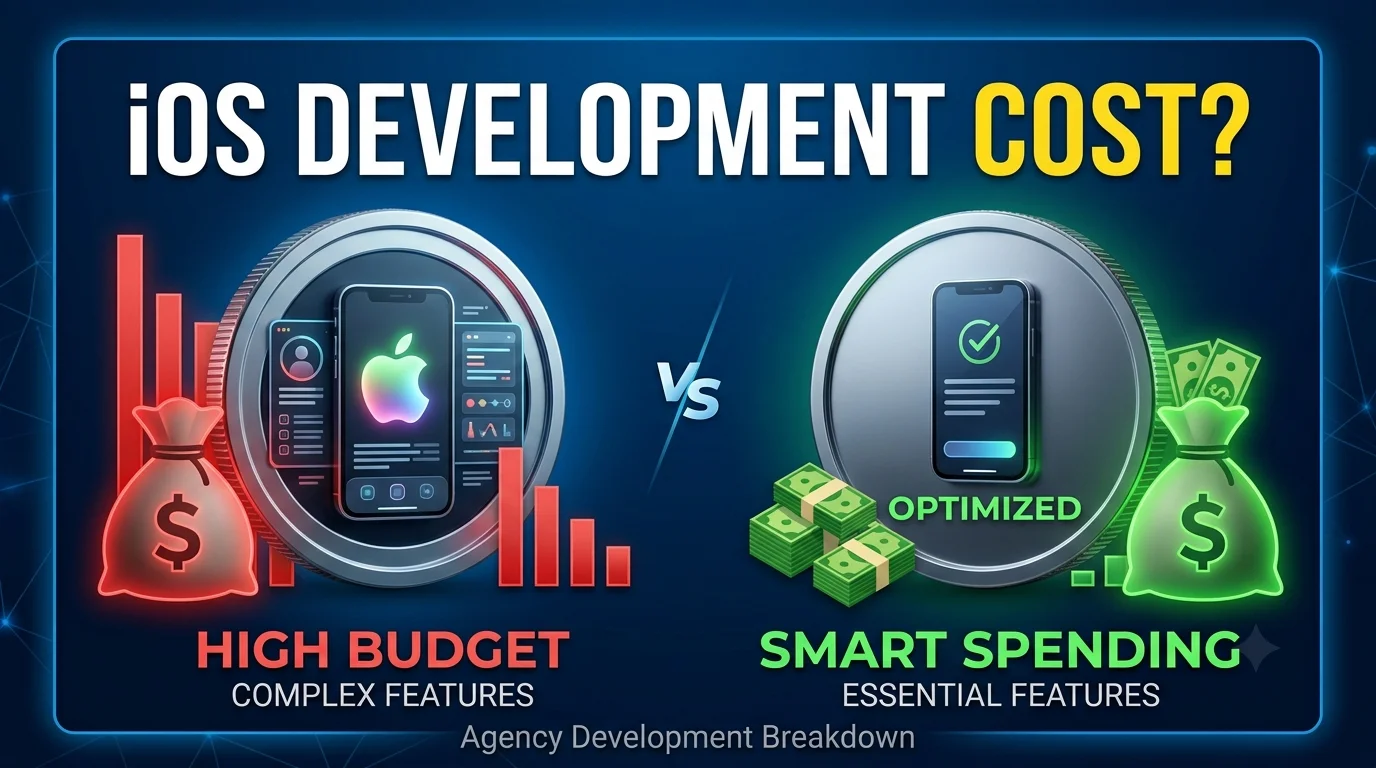
To give you an immediate baseline, a standard custom iOS application in 2026 typically averages around $170,000, though the actual spectrum is broad. A simple, low-complexity app can start as low as $15,000 to $50,000, whereas an enterprise-grade platform or a complex, AI-driven application frequently ranges from $150,000 to over $400,000.
Key Drivers of iOS Development Costs
To accurately forecast an application’s budget, stakeholders must analyze several highly fluid variables that dictate engineering hours.
1. Architectural Complexity and Feature Depth
The volume and technical difficulty of the feature set represent the primary cost drivers. In 2026, advanced capabilities are no longer luxury additions but standard consumer expectations:
Basic Core Infrastructure: Standard user authentication, simple push notifications, and basic data storage form the baseline of lower-end budgets.
Real-Time Processing: Integrating features like live chat, GPS location tracking, or real-time data synchronization requires a robust custom backend, adding substantial engineering hours.
The AI Premium: Integrating Apple’s Core ML for on-device processing or connecting to large language models (LLMs) via APIs can add an extra $15,000 to $50,000 to a budget due to data pipeline complexities and security compliance.
2. Premium UI/UX Design & Apple’s Guidelines
Apple’s demographic traditionally prioritizes fluid, intuitive, and highly polished user experiences. Adhering to Apple’s strict Human Interface Guidelines means design cannot be a secondary thought:
Discovery and Wireframing: Laying out user flows and low-fidelity prototypes generally requires initial capital to ensure market validation before programming begins.
High-Fidelity UI and Branding: Custom visual assets, bespoke micro-interactions, and complex animations built to feel premium can easily run well into five figures depending on the app’s scale.
3. Development Team Structure and Location
The geographic location of the engineering team heavily influences the ultimate price tag because hourly developer rates vary significantly across the globe:
North America: Agencies and developers Command the highest rates, typically ranging between $100 and $250 per hour.
Western Europe: Rates average around $70 to $180 per hour.
Eastern Europe: Highly competitive technical talent generally costs between $40 and $100 per hour.
South Asia and Southeast Asia: Offers a massive talent pool with highly cost-effective rates ranging between $20 and $60 per hour.
Budget Allocation Across the Lifecycle
A common mistake is assuming the entire budget goes straight into writing code. A healthy, defensive budget distributes capital across every single phase of the Software Development Life Cycle (SDLC) to avoid project stalls.
Discovery & Product Planning (10% to 15% of budget): This upfront phase involves creating the Software Requirements Specification (SRS), mapping out technical architecture, and validating API integrations.
UI/UX Design (15% of budget): Creating the entire interactive frontend experience, custom branding, and sensory micro-interactions.
Frontend & Backend Development (40% to 50% of budget): The bulk of the investment. It covers writing native Swift code and building secure, scalable database architectures.
QA, Testing, & Security Compliance (15% to 20% of budget): Crucial for iOS. Automated regression suites, manual user acceptance testing, and security penetration testing ensure the app won’t be immediately rejected by Apple’s review team.
Deployment & Store Readiness (5% to 10% of budget): Preparing metadata, visual screenshots, privacy disclosures, and managing the Apple Developer Program submission ($99/year for individuals, $299/year for enterprises).
The Post-Launch Reality: Building the app is only part of the financial equation. Founders must budget 15% to 25% of their initial development cost annually for post-launch maintenance. This covers cloud server hosting, mandatory Apple OS updates, patch fixes, and App Store Optimization (ASO) to maintain search visibility.
Conclusion:
Meanwhile, developing an iOS app in 2026 is an investment that hinges on balance. While advanced features, premium UI/UX design, and specialized talent drive up the initial capital requirements, strategic planning through a phased Minimum Viable Product (MVP) approach can keep costs manageable.
Success requires budgeting not just for the initial build, but also factoring in geographic rate differences and the ongoing operational costs necessary to maintain compliance with Apple’s evolving ecosystem. By matching technical requirements with clear business goals, companies can navigate these variables to build a high-performing app that delivers strong long-term ROI.