Introduction:
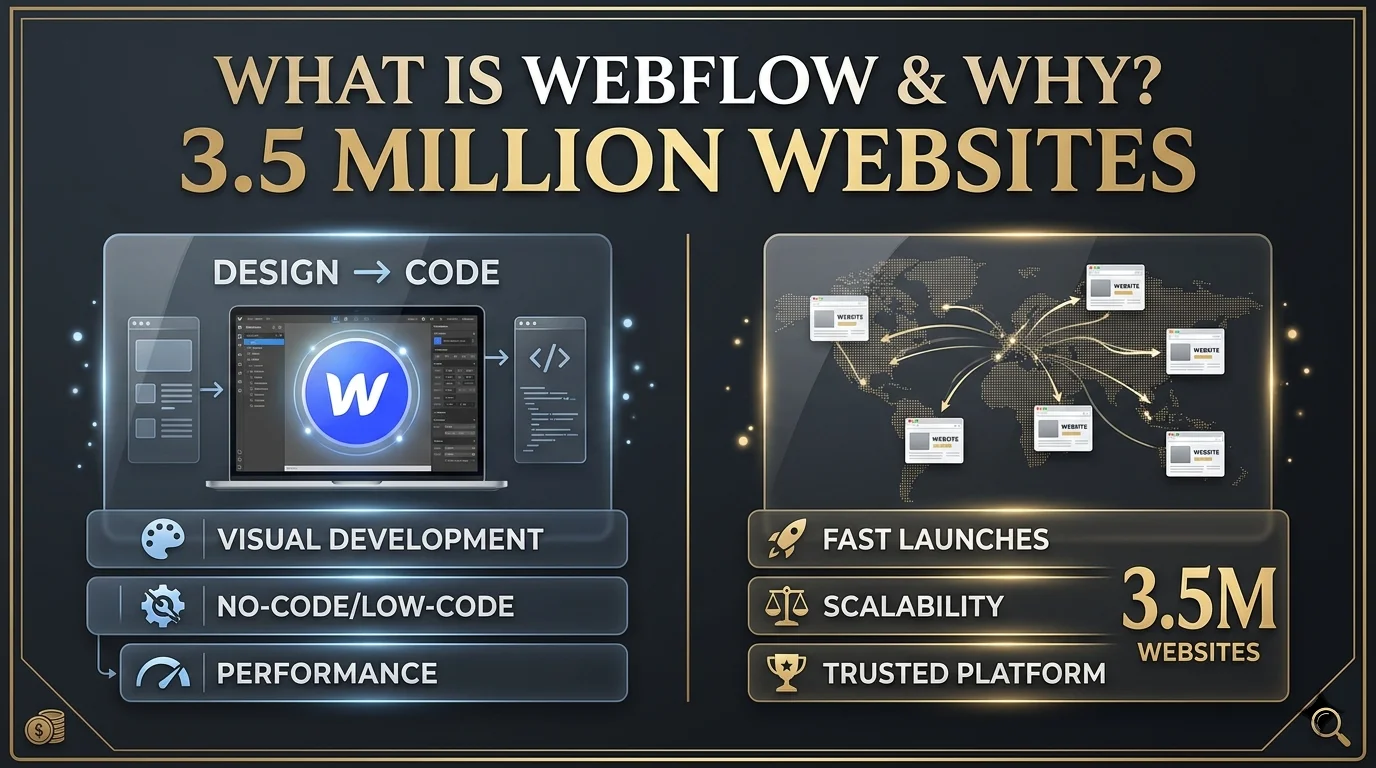
By May 2026, Webflow has solidified its position as the premier “visual development” platform, bridging the gap between simple drag-and-drop builders (like Wix) and complex, manual coding. With over 3.5 million users and teams spanning 190 countries, it has become the go-to choice for companies that prioritize high-end design without wanting to get bogged down in the traditional “developer bottleneck.”
The following discussion explores what Webflow is and the core reasons behind its massive adoption:
What is Webflow?
Unlike traditional CMS platforms like WordPress, which often rely on pre-made templates and a heavy layer of plugins, Webflow is a visual canvas for professional code. When a designer moves an element or changes a margin in Webflow, the platform generates clean, production-ready HTML, CSS, and JavaScript in the background.
It is essentially an Integrated Development Environment (IDE) that looks like a design tool (similar to Adobe Photoshop or Figma). This allows for “pixel-perfect” control, meaning every single design detail can be customized without writing code manually, while still producing a site that is as lightweight and fast as a custom-coded one.
Why 3.5 Million Websites Are Now Built on It
1. The Death of the “Developer Bottleneck”
In traditional enterprise setups, marketing teams often have to wait days or weeks for a developer to make structural changes to a landing page. Webflow flips this model. By giving designers the power to build and launch production-ready sites directly, companies like Dropbox have reported up to a 67% decrease in development ticketing. This allows marketing teams to respond to market trends in real-time rather than waiting on a technical queue.
2. Performance Is “Built-In,” Not “Bolted-On”
One of the biggest frustrations with older platforms is “plugin bloat” where adding features slows down the site. Webflow operates on a global edge network (CDN), serving content from servers closest to the visitor. Because the code is semantic and clean, most Webflow sites pass Google’s Core Web Vitals by default, which is a massive advantage for SEO and user experience.
3. Enterprise-Grade Security and Hosting
For many of the 3.5 million users, the appeal lies in the “closed” nature of the platform.
Unlike WordPress, where users must manage their own hosting, security patches, and plugin updates, Webflow handles security and hosting in-house. This eliminates the risk of a site breaking due to an outdated plugin a common pain point that has driven many businesses to migrate.
4. Advanced Interactions and Animations
Webflow’s interaction engine allows designers to create complex, scroll-based animations and interactive elements that would typically require a specialist JavaScript developer. This has made it the favorite platform for creative agencies and startups that want their brand to stand out through “storytelling” and high-motion web experiences.
5. Lower Total Cost of Ownership (TCO)
While the monthly subscription for Webflow might be higher than basic hosting, the Total Cost of Ownership is often significantly lower. Organizations like Orangetheory and NCR have reported millions in annual savings by consolidating their hosting, CMS, and security into one platform and reducing the headcount needed for basic site maintenance.
6. Transition to “Agentic” and AI-Driven Design
As of the May 2026 updates, Webflow has integrated AI-driven “Workspace” plans. These new features allow teams to use AI to generate layouts, suggest SEO improvements, and automate repetitive design tasks directly within the editor. This keeps the platform at the cutting edge of modern technology trends, attracting a younger demographic of professionals (primarily aged 25–34).
Conclusion:
Webflow’s rise to 3.5 million sites is a reflection of a broader move toward No-Code/Low-Code in the professional world. It is no longer just for freelancers; it is a serious enterprise tool used by major brands to achieve “marketing velocity” the ability to design, test, and ship at the speed of thought.