
Introduction:
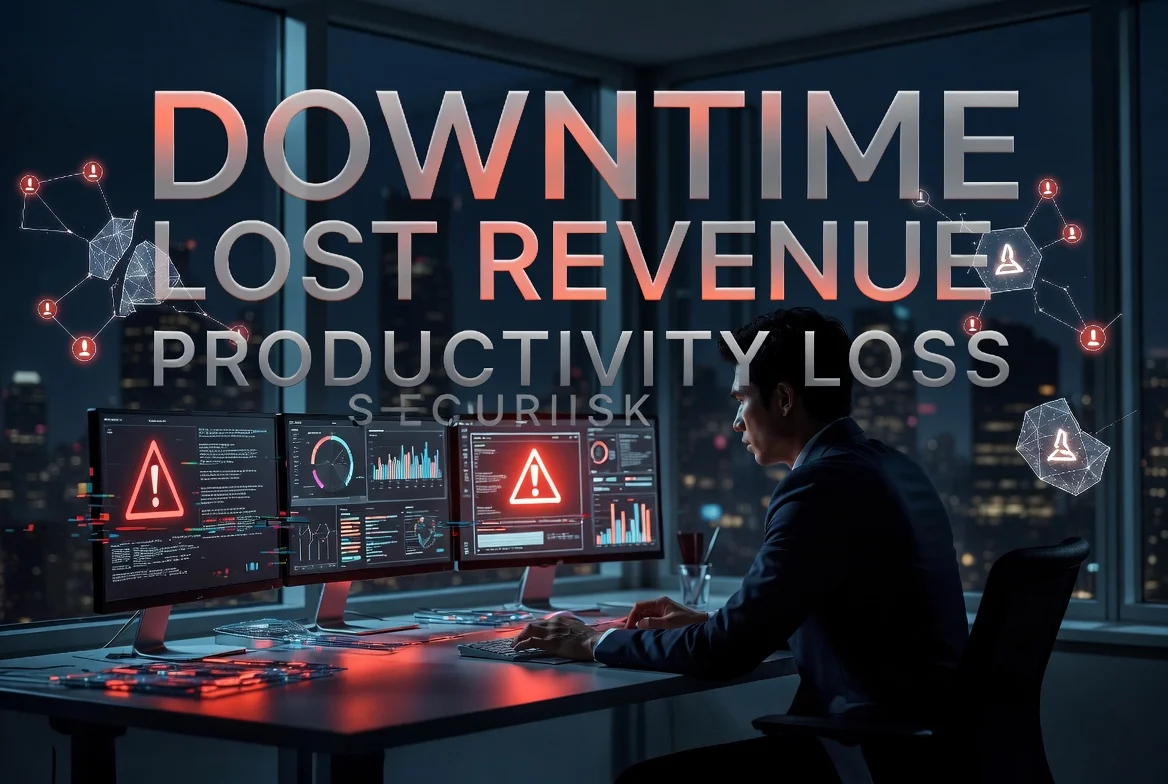
In 2026, the concept of “business hours” has largely evaporated, replaced by a 24/7 digital economy. This shift has fundamentally changed the financial stakes of IT downtime. For modern organizations, an outage is no longer just a technical glitch; it is a significant financial event that impacts every layer of the business.
The Immediate Financial Drain
The most visible cost is the direct loss of revenue. For a mid-market company, the average cost of downtime in 2026 sits at approximately $14,056 per minute. In high-stakes sectors like financial services or healthcare, this figure can easily surge to $50,000 per minute.
When systems fail, the primary revenue drivers whether they are e-commerce checkouts, digital ad placements, or client-facing portals immediately halt. For an enterprise, a single hour of downtime can represent a baseline loss of $300,000 to $1 million, before factoring in any “hidden” variables.
The Productivity Tax
Beyond direct sales, downtime creates a massive “productivity tax.” Employees are often the highest expense for a business, and when systems are offline, their labor is effectively wasted.
Idle Labor: If a 100-person team is sidelined for two hours, the company is essentially paying for 200 hours of unproductive time.
The Catch-Up Effect: When systems return, the cost continues through overtime pay and the disruption of project timelines. Teams must work extra hours to clear backlogs, often leading to burnout and decreased quality of work.
Long-Term Reputational Erosion
While lost revenue is a one-time hit, the damage to a brand’s reputation can last for years. In the current market, customer patience is at an all-time low.
Customer Churn: Research indicates that roughly 32% of customers will leave a brand after a single bad experience. For SaaS companies, an outage during a renewal period or a free trial is often a terminal event for that client relationship.
Market Devaluation: For public companies, frequent or severe outages can lead to a dip in share prices. Investors increasingly view IT resilience as a core indicator of management quality and operational health.
Regulatory and Contractual Penalties
For businesses in regulated industries like finance, healthcare, or telecommunications, downtime carries a legal price tag.
SLA Credits: Most service contracts include Service Level Agreements (SLAs). Every minute of downtime past a certain threshold converts directly into refunds or service credits that must be paid back to clients.
Compliance Fines: Outages that result in data unavailability can trigger regulatory investigations and fines, particularly if they are found to stem from negligence or a lack of proper disaster recovery planning.
The Hidden Technical Debt
Finally, there is the opportunity cost of the IT team itself. When a “Priority 1” incident occurs, innovation stops. Instead of developing new features or optimizing search marketing strategies, your most expensive technical talent is diverted to “firefighting.” This stalls growth and allows competitors who maintained their uptime to move further ahead in the market.
In summary, the real cost of downtime is a “loaded” figure. It combines the immediate evaporation of sales with the slow bleed of lost productivity, the sudden hit of legal penalties, and the long-term erosion of brand trust. For most businesses in 2026, investing in proactive monitoring and redundancy is no longer a luxury—it is a basic requirement for financial survival.
Conclusion:
Meanwhile, the real cost of IT downtime is far more than a simple loss of sales; it is a systemic disruption that drains employee productivity, erodes hard-won customer trust, and incurs heavy regulatory penalties. In an era where 24/7 availability is the baseline expectation, an outage isn’t just a technical failure, it’s a direct threat to a company’s market position.
For any business aiming for long-term growth, investing in robust IT resilience is not an operational expense, but a strategic necessity to protect the bottom line.