Introduction:
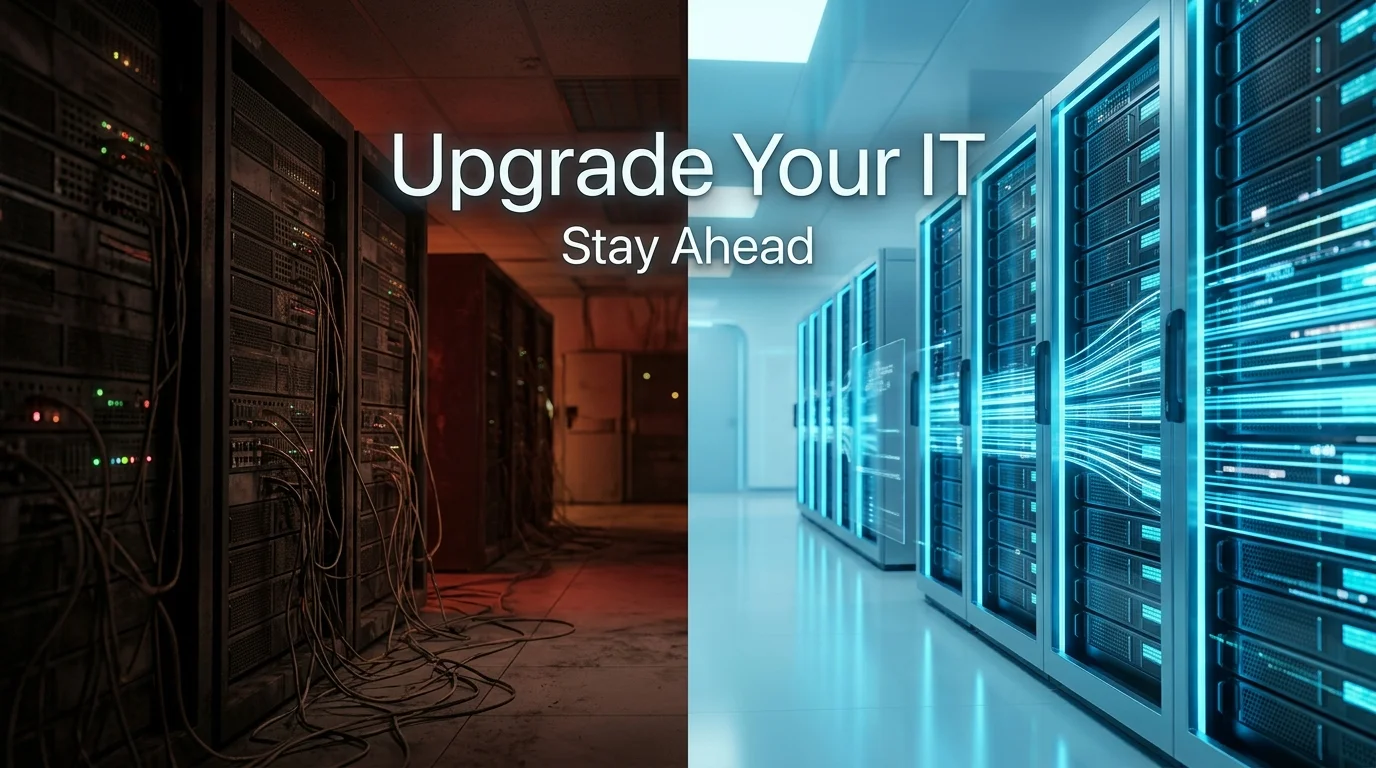
The decision to replace aging IT infrastructure is often delayed due to the perceived high cost of new equipment. However, clinging to outdated servers, workstations, and networking gear creates a “tech debt” that quietly erodes profitability. Transitioning to modern infrastructure is not just an upgrade; it is a strategic move to eliminate hidden costs and unlock new operational capabilities.
The Rising Cost of Maintenance and Energy
As hardware ages, the cost to keep it running climbs exponentially. Older servers and desktops require more frequent repairs, and finding replacement parts for discontinued models can become an expensive, time-consuming hunt. Furthermore, aging hardware is significantly less energy-efficient. Modern processors and power supplies provide much higher performance per watt.
By replacing “power-hungry” legacy systems, businesses often see a substantial reduction in monthly utility bills and cooling costs in the data center.
Closing Critical Security Gaps
Legacy systems are a primary target for cybercriminals. Manufacturers eventually reach an “End of Life” (EOL) point for their products, meaning they stop releasing security patches and firmware updates. When an exploit is discovered for an EOL system, it remains permanently open, creating a “backdoor” into your entire network. Newer infrastructure is built with modern security threats in mind, featuring hardware-level encryption and secure boot protocols that older machines simply cannot match.
Eliminating the “Performance Ceiling”
Employee productivity is directly capped by the speed of the tools they use. Aging infrastructure often leads to slow boot times, application crashes, and sluggish network speeds that frustrate staff and slow down customer service. Modern infrastructure for utilizing Solid State Drives (SSDs), high-speed DDR5 memory, and advanced networking standards, that removes these bottlenecks. This allows your team to utilize modern, resource-heavy software (such as AI-driven tools or advanced data analytics) that would be impossible to run on older hardware.
Enhancing Reliability and Minimizing Downtime
The “Mean Time Between Failures” (MTBF) inevitably shortens as hardware reaches the end of its expected lifespan. Relying on aging gear is essentially playing a game of chance with your business continuity. A sudden server failure can result in hours or days of downtime, leading to lost revenue and damaged client trust. New infrastructure provides the reliability and “uptime” necessary for modern 24/7 operations, often backed by robust manufacturer warranties that provide peace of mind.
Scalability and Integration with the Cloud
Modern business requires agility. Aging, “on-premise” infrastructure is often rigid and difficult to scale. Newer hardware is designed with a “cloud-first” mentality, making it much easier to create hybrid environments where on-site resources and cloud services work together seamlessly. This flexibility allows a business to scale its storage or processing power up or down in response to market demands, a feat that is nearly impossible with old, siloed equipment.
Conclusion
Replacing aging IT infrastructure is an investment in the future resilience of a business. While the initial outlay may seem daunting, it is quickly offset by lower maintenance costs, improved security, and a significant boost in employee output. By modernizing your digital foundation, you ensure that your technology acts as a springboard for growth rather than an anchor holding you back.