Introduction:
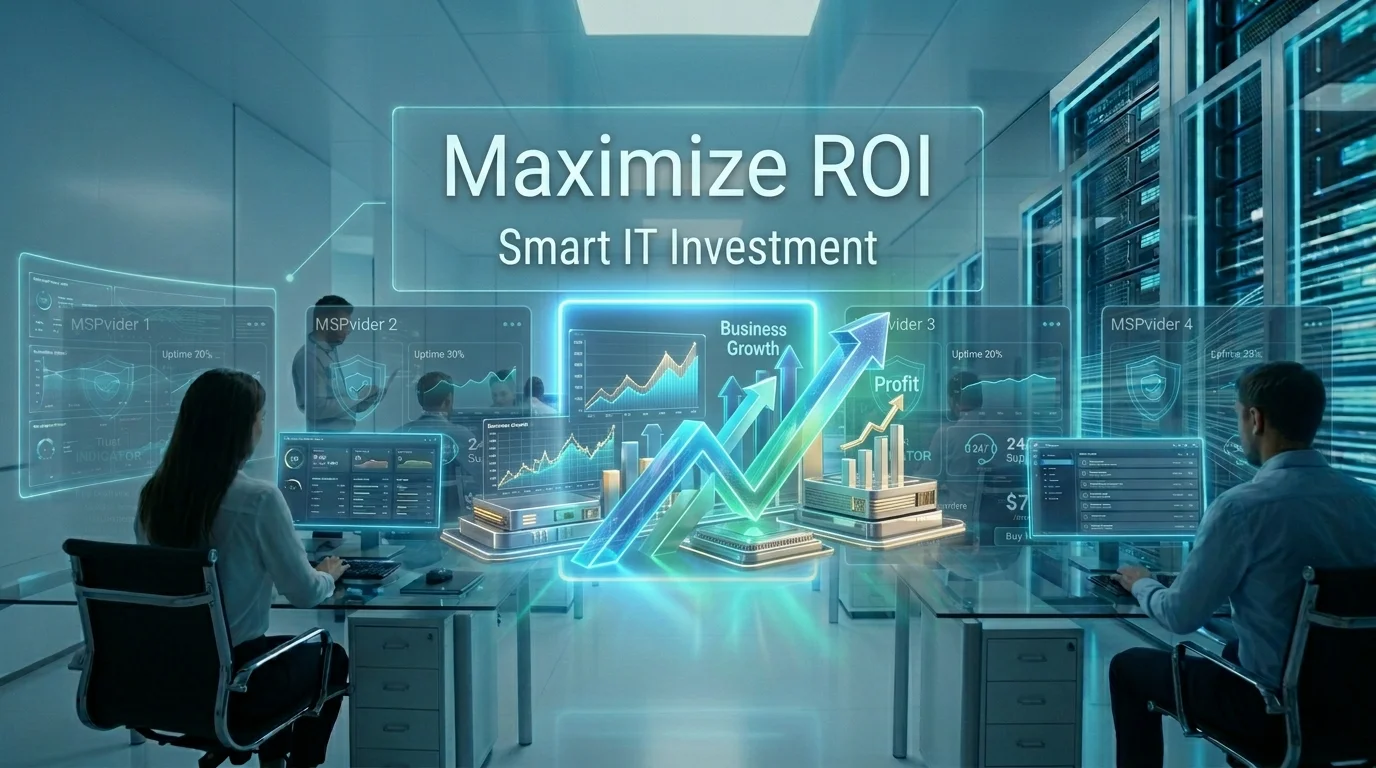
The transition from traditional, internal IT management to a managed model is often viewed as a simple outsourcing of tasks, but its true value lies in its role as a financial catalyst. By shifting IT from a capital-heavy burden to a predictable operational expense, businesses can unlock significantly higher returns on their technology investments.
Moving from Capital Outlay to Predictable Expenses
One of the most immediate impacts on ROI is the shift from Capital Expenditure (CapEx) to Operational Expenditure (OpEx). Traditional IT often requires massive, up-front investments in servers, hardware, and software licenses that depreciate the moment they are installed. Managed IT replaces these unpredictable spikes with a fixed monthly fee.
This predictability stabilizes cash flow and allows leadership to redirect capital toward core business initiatives like product development or market expansion that drive direct revenue.
Access to High-Level Expertise Without the Headcount
Building an in-house team that possesses expert-level knowledge in cybersecurity, cloud architecture, and network engineering is prohibitively expensive for most organizations. Between salaries, benefits, and ongoing training, the cost of “carrying” that talent is immense.
Managed IT provides a “fractional” expertise model. You gain access to a diverse “bench” of certified specialists for a fraction of the cost of hiring a single full-time senior engineer. This ensures that your technology is built on high-level strategy rather than the limited scope of a generalist.
Minimizing the “Hidden Cost” of Downtime
The ROI of technology isn’t just measured by what it produces, but by what it prevents. Downtime is a silent profit killer; when systems are down, labor costs continue while productivity hits zero, and customer trust erodes. Managed IT focuses on Proactive Monitoring and Maintenance.
By identifying and patching vulnerabilities or hardware failures before they cause a crash, providers keep the “engine” of the business running consistently. The cost of a monthly managed plan is almost always lower than the financial loss of a single major system outage.
Scalability and Resource Optimization
In a traditional setup, businesses often over-buy hardware to “future-proof” their needs, meaning they pay for capacity they won’t use for years. Conversely, under-buying leads to bottlenecks that stifle growth. Managed IT enables Just-in-Time Scalability.
As your business grows, your IT resources can be adjusted almost instantly. This agility ensures you are only ever paying for the resources you are currently using, maximizing the efficiency of every dollar spent on your digital stack.
Closing the Security Gap
A single data breach can result in catastrophic financial penalties, legal fees, and lost business often far exceeding the lifetime cost of managed services. Managed IT providers integrate Enterprise-Grade Security into their standard service, bringing tools and protocols that would be too expensive for a small or medium-sized business to procure independently.
By mitigating this high-impact risk, the managed model protects the company’s bottom line and ensures that technology remains an asset rather than a liability.
Conclusion:
Meanwhile, Managed IT transforms technology from a costly overhead into a strategic engine for growth. By eliminating the volatility of “break-fix” costs and providing access to high-tier expertise, it ensures that every rupee spent on your infrastructure contributes directly to operational efficiency.
In the long run, the true Return on Investment is found in the peace of mind that comes from a secure, scalable, and consistently high-performing digital environment.