Introduction:
Building a successful music app requires careful planning across concept development, technical execution, and market strategy. This journey involves defining your Unique Selling Proposition (USP) whether it’s streaming, social sharing, creation, or education to stand out in a competitive market.
The initial phase focuses on market research to understand user needs and competitor weaknesses, followed by designing a compelling, user-friendly UI/UX. The technical development involves choosing the right stack, ensuring robust back-end support for media streaming, and adhering to strict legal and licensing requirements for music content.
Finally, a strategic launch, including effective App Store Optimization (ASO) and marketing, is crucial for driving initial downloads and achieving long-term user retention and growth.
Market Analysis and Conceptualization
The initial phase of building a music app is critical for defining its path to success:
- Define Your USP: Clearly identify what makes your app unique. Will it focus on high-fidelity audio, social playlist curation, niche genres, or music creation tools? This differentiates you from giants like Spotify or Apple Music.
- Target Audience Identification: Determine precisely who your core users are (e.g., professional musicians, casual listeners, students, DJs) to tailor features and marketing.
- Competitor Deep Dive: Analyze existing music apps to understand their strengths, pricing models, feature gaps, and user complaints. Identify opportunities to innovate where competitors fall short.
- Feasibility & Monetization: Confirm the technical and financial viability of your concept. Select a sustainable monetization model early on (e.g., subscriptions, ads, in-app purchases) that aligns with your USP and audience.
- Core Feature Prioritization: Outline the minimum viable product (MVP) features, focusing on the most essential functionalities that deliver the core value proposition.
Licensing and Legal Considerations
A critical and often complex step in developing a music app is navigating licensing and legal considerations. To legally stream, download, or allow users to interact with copyrighted music, developers must secure necessary rights from rights holders, primarily through performance rights organizations (PROs) like ASCAP and BMI, and publishing organizations.
This includes obtaining licenses for mechanical reproduction (for downloads or permanent copies) and public performance (for streaming).
Failure to secure these agreements exposes the app to significant legal liability, fines, or immediate takedown. Additionally, the app must adhere to strict data privacy laws (like GDPR) regarding user information and comply with platform-specific terms of service (App Store and Google Play).
Music Licensing
Music Licensing is the fundamental legal hurdle for any music app, as it dictates the ability to use copyrighted content. Developers must secure two primary types of rights: mechanical licenses for reproducing music (like downloads or permanent storage) and public performance licenses for streaming.
These licenses are typically obtained from performing rights organizations (PROs) and publishers, and the process is often complex, requiring negotiated agreements and adherence to royalty payment structures based on usage. Skipping or mishandling this step can lead to significant legal action and app removal.
Merchandise and Ticket Sales
Integrating Merchandise and Ticket Sales offers a powerful monetization stream and enhances user engagement by connecting fans directly with artists. For merchandise, this involves creating a feature that links users to artist stores or setting up an in-app marketplace for purchasing physical goods. For ticket sales, the app can integrate with major ticketing platforms (via APIs) or host its own sales system for live events. This dual approach transforms the app from a simple playback tool into a comprehensive fan-to-artist commerce hub, generating revenue through commissions or service fees.
Legal Tips (Short Bullets)
- Secure All Rights: Never assume a piece of music is free to use; always obtain explicit licenses for both streaming and reproduction.
- Privacy First: Ensure strict compliance with global data protection laws (e.g., GDPR and CCPA) regarding user personal and listening data.
- Clear ToS/Privacy Policy: Publish easily accessible, comprehensive Terms of Service (ToS) and a Privacy Policy outlining app usage, content rights, and data handling.
- Content Moderation: Implement a clear takedown policy for user-uploaded content that may infringe on copyright (DMCA compliance).
- Platform Adherence: Scrupulously follow the App Store and Google Play guidelines to avoid app rejection or suspension.
Technical Development
- Technology Stack Selection: Choose the right programming languages ($\text{iOS/Swift, Android/Kotlin, cross-platform}$ tools like $\text{React Native}$) and a scalable cloud back-end ($\text{AWS, Google Cloud, or Azure}$) to handle high volumes of media streaming and user traffic.
- Media Streaming Infrastructure: Develop a robust and low-latency system for high-quality audio delivery, utilizing Content Delivery Networks ($\text{CDNs}$) to minimize buffering and ensure a seamless global user experience.
- Database & Storage: Implement efficient databases to manage vast amounts of metadata (songs, artists, albums) and secure, distributed storage for the actual music files.
- API Integration: Integrate with third-party $\text{APIs}$ for services like payment processing (subscriptions), social sharing, and possibly music identification or recommendation engines.
- Offline Functionality: Architect the app to securely store and manage cached data for reliable offline playback, adhering to licensing requirements.
- Security and Testing: Prioritize security protocols for user data and content protection ($\text{Digital Rights Management, or DRM}$). Conduct extensive quality assurance ($\text{QA}$) and stress testing to ensure performance and stability across various devices and network conditions.
UX/UI Design
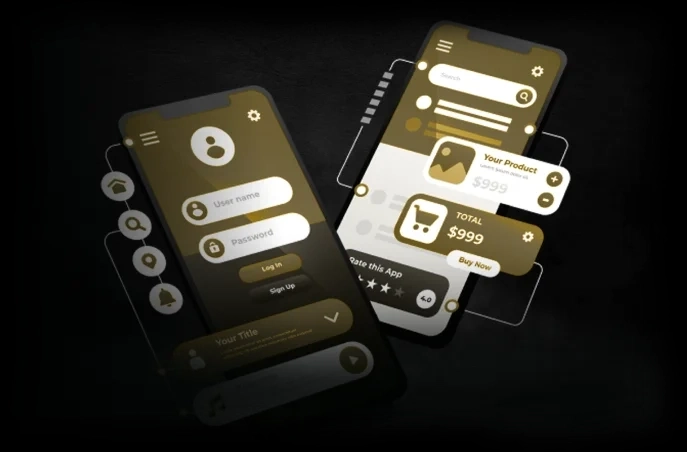
The User Experience (UX) and User Interface (UI) Design is vital as it dictates how users interact with the music app. A successful design must prioritize a clean, intuitive interface that allows for easy navigation, fast content discovery, and seamless playback control, even on the go. Designers should focus on a visually appealing aesthetic that aligns with the app’s brand, while the UX must ensure reliability and speed, making features like playlist creation and search efficient and enjoyable to drive high user retention.
App Development and Testing
The App Development and Testing phase transforms the design into a functional application. This involves using the chosen technology stack to write and integrate the front-end interface with the back-end architecture designed for scalable media streaming and content management. Rigorous, multi-stage testing (QA) is essential to identify and fix bugs, minimize crashes, and ensure the app’s stability, security, and performance across various devices and operating system versions before release.
Monetization Strategy (Bullets)
- Subscription Model (Freemium/Premium): Offer a basic, ad-supported free tier (Freemium) and a paid subscription (Premium) for ad-free listening, offline downloads, and higher-quality audio.
- Ad Revenue: Incorporate non-intrusive audio and banner ads for free users, leveraging targeted advertising to maximize eCPM (effective cost per mille).
- In-App Purchases (IAPs): Offer one-time purchases for unique features, custom equalizers, or exclusive content.
Launch and Marketing
The Launch and Marketing phase is focused on securing initial downloads and user adoption. This requires a strong App Store Optimization (ASO) strategy to make the app discoverable through search, combined with targeted digital advertising and social media campaigns to drive awareness. A successful launch leverages early press, influencer collaborations, and promotional offers to generate buzz and climb the store ranking charts.
Post-Launch Support and Scaling
Post-Launch Support and Scaling ensures the app’s long-term viability and growth. This involves continuous performance monitoring using analytics to track user behavior, identify churn points, and manage technical debt. The team must provide regular bug fixes and feature updates based on user feedback, while the back-end infrastructure needs to be constantly scaled to handle growing user numbers and data traffic without compromising speed or reliability.
Conclusion:
Creating a music app demands a strategic journey from defining a unique concept and navigating complex music licensing to ensuring robust technical development and a seamless UX/UI design. Success is ultimately determined by a strong monetization model, an effective launch and marketing strategy (including ASO), and a commitment to continuous post-launch support and scaling to meet user demand.