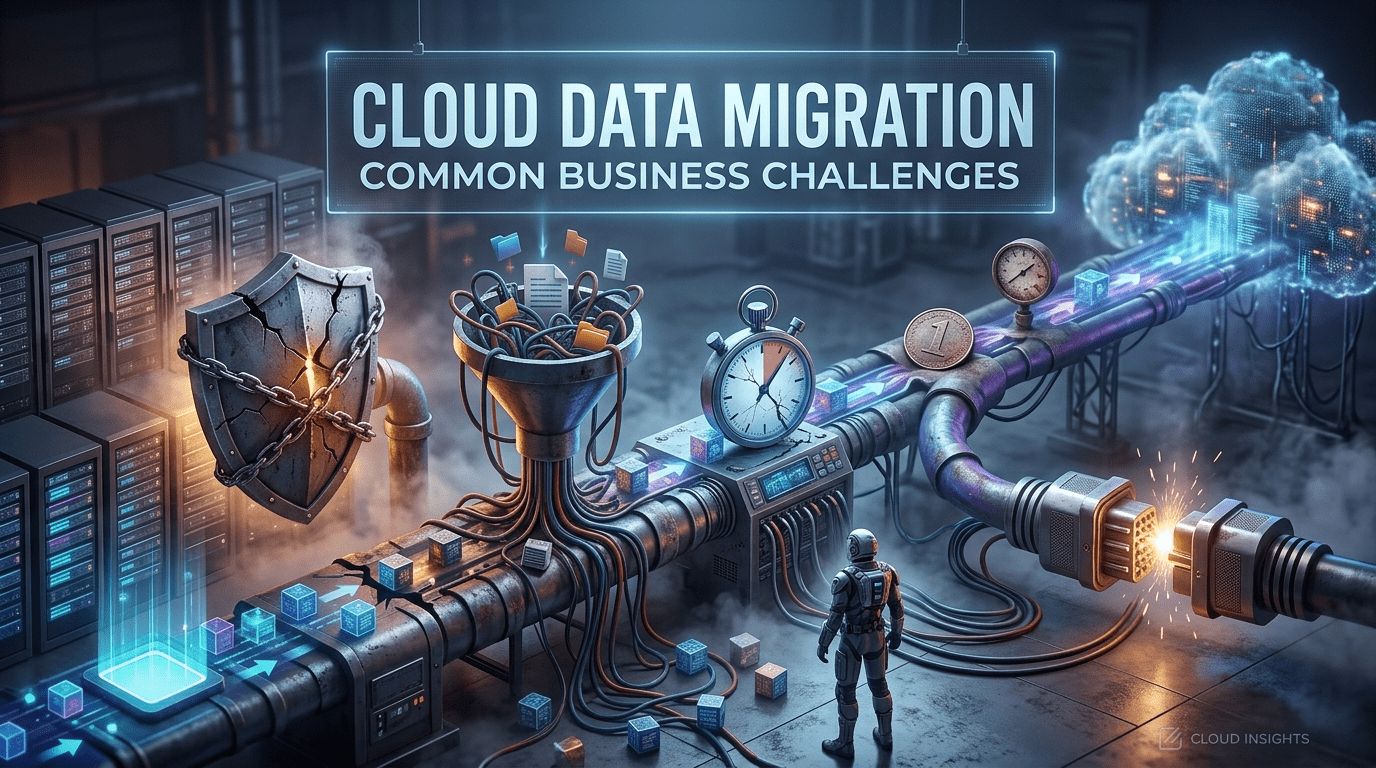
Cloud data migration is a transformative step for any organization, but the process is rarely a simple “lift and shift.” Moving large volumes of data from on-premises servers to the cloud involves complex technical and organizational shifts that can lead to significant bottlenecks if not anticipated.
Here is a discussion of the common challenges businesses face during this transition.
1. Data Integrity and Loss
The most immediate concern during migration is ensuring that data remains intact and uncorrupted. During the transit phase, packets of data can be lost, or formatting can become incompatible with the new cloud environment. Businesses often struggle with “data gravity,” where the sheer volume of data makes it difficult to move without significant downtime. Verifying data integrity through checksums and rigorous testing is essential but time-consuming.
2. Security and Compliance Risks
Moving data means expanding the “attack surface” of a business. Transferring sensitive information over the internet or via third-party tools introduces vulnerabilities. Furthermore, many industries are governed by strict regulations regarding where data is stored geographically. A common hurdle is ensuring the cloud provider’s infrastructure meets specific compliance standards, such as GDPR or industry-specific certifications—while maintaining end-to-end encryption during the move.
3. Cost Management and “Cloud Shock”
While the cloud is often marketed as a cost-saving measure, the initial migration can be expensive. Businesses frequently face unexpected costs related to data egress fees (the cost of moving data out of a current provider), professional services, and the “refactoring” of old applications to make them cloud-compatible. Without a clear budget, organizations may experience “cloud shock” when the first few monthly invoices arrive, as resource consumption often spikes during the optimization phase.
4. Lack of Clear Strategy and Skills Gap
A migration without a roadmap often leads to “orphaned” data files that are moved but no longer serve a purpose or redundant storage. Additionally, many internal IT teams are experts in legacy hardware but may lack the specialized skills required to manage cloud-native environments. This skills gap can lead to poor architecture choices, such as over-provisioning resources, which leads back to the issue of inflated costs.
5. Application Compatibility and Refactoring
Not every application is ready for the cloud. Legacy software designed for local servers may perform poorly or fail entirely in a cloud environment due to latency issues or different OS requirements. Businesses must decide whether to “rehost” (move as-is), “replatform” (make minor adjustments), or “refactor” (completely rewrite). Refactoring is the most effective for long-term performance but requires the most time and technical expertise.
6. Bandwidth and Latency Issues
Moving terabytes of data requires massive bandwidth. If the internet connection is insufficient, the migration could take weeks or even months, delaying operations. Even after the move, if the cloud data center is geographically far from the end-users, latency can affect the performance of real-time business applications, leading to a poor user experience for employees and customers alike.
Conclusion:
The key to overcoming these challenges lies in a phased approach rather than a “big bang” migration. By starting with non-critical workloads, a business can test its strategy and upskill its team before moving core databases. Automation tools are also becoming vital; they can handle the repetitive tasks of data validation and mapping, which reduces the margin for human error.