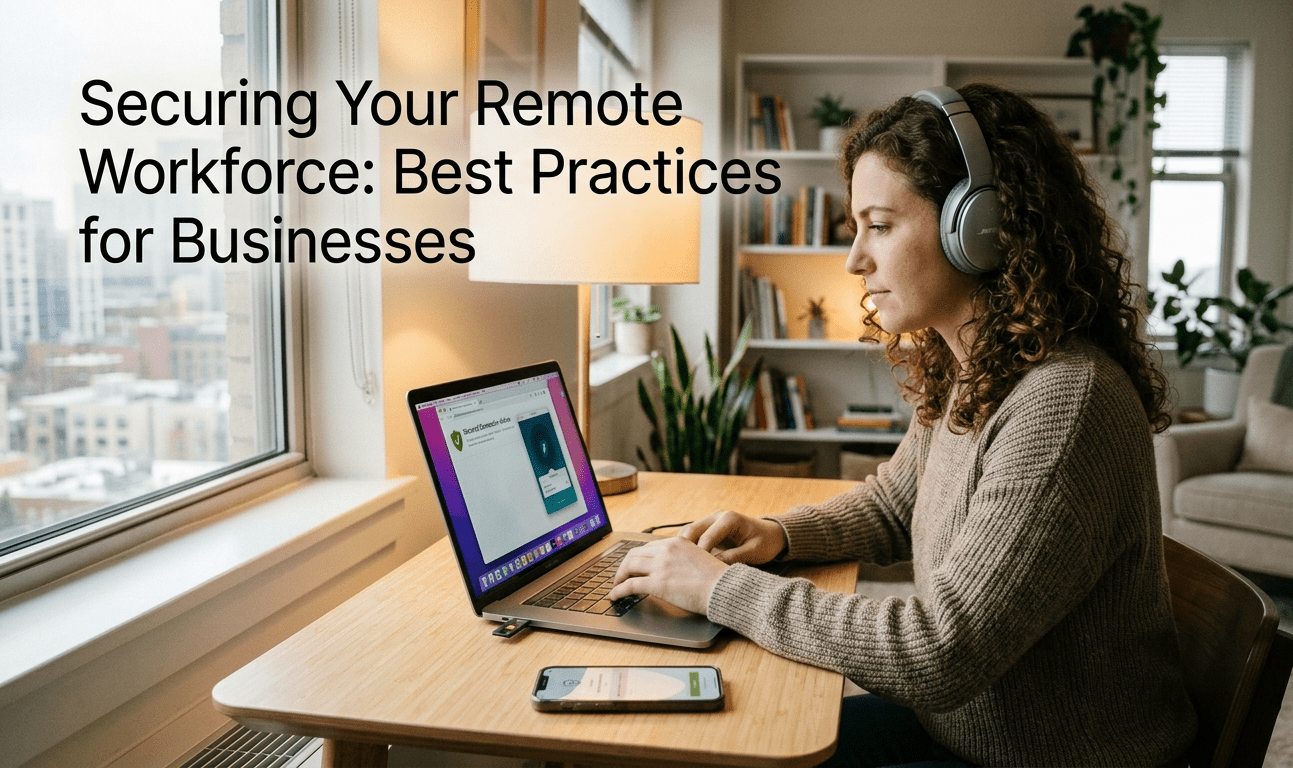
The transition to a permanent remote or hybrid workforce has fundamentally shifted the “security perimeter” from the office building to the individual employee’s home. In 2026, securing a distributed team is no longer just about providing a VPN; it requires a layered defense strategy that accounts for diverse environments, personal hardware, and the increased risk of social engineering.
The Pillars of Remote Resilience
The Implementation of Zero Trust Architecture The most effective way to secure a remote workforce is through a Zero Trust model. This philosophy operates on the principle of “never trust, always verify.” Regardless of whether an employee is at a coffee shop or their home office, every access request to a company resource must be authenticated, authorized, and encrypted.
By using Identity and Access Management (IAM) tools, businesses can ensure that even if a password is stolen, the intruder cannot move laterally through the network.
Endpoint Protection and Managed Hardware:
Allowing employees to use personal devices often called Bring Your Own Device (BYOD) that introduces significant vulnerabilities. Personal computers often lack enterprise-grade antivirus software or the latest security patches. Providing company-managed hardware equipped with Endpoint Detection and Response (EDR) allows IT teams to monitor for threats in real-time and remotely “wipe” sensitive data if a laptop is lost or stolen.
Securing the “Home Hub” The home router is frequently the weakest link in the chain. Remote workers should be encouraged (or required) to change default administrative passwords on their routers and enable WPA3 encryption. For high-risk roles, companies are increasingly providing “travel routers” or dedicated hardware firewalls that create a clean, encrypted tunnel directly to corporate servers, bypassing the rest of the household’s noisy and potentially “infected” IoT devices like smart fridges or cameras.
The Human Element: Training and Culture
Combating Modern Social Engineering As technical barriers grow stronger, attackers pivot to the “human API.” Remote workers are more susceptible to phishing and “vishing” (voice phishing) because they cannot easily lean over a desk to ask a colleague, “Does this email look real?” Regular, bite-sized Security Awareness Training that is including simulated phishing attacks is essential to keep security top-of-mind.
The Role of Multi-Factor Authentication (MFA) MFA is the single most effective deterrent against unauthorized access. However, simple SMS-based codes are increasingly bypassed by “SIM swapping.” Moving toward hardware security keys or app-based “push” notifications provides a much higher level of assurance that the person logging in is truly the employee.
Proactive Policy Management
Establishing a clear Remote Work Security Policy is the final piece of the puzzle. This document should outline expectations regarding public Wi-Fi usage, the storage of physical documents, and the protocol for reporting a suspected breach. When employees understand the “why” behind the security hurdles, compliance rates increase significantly.