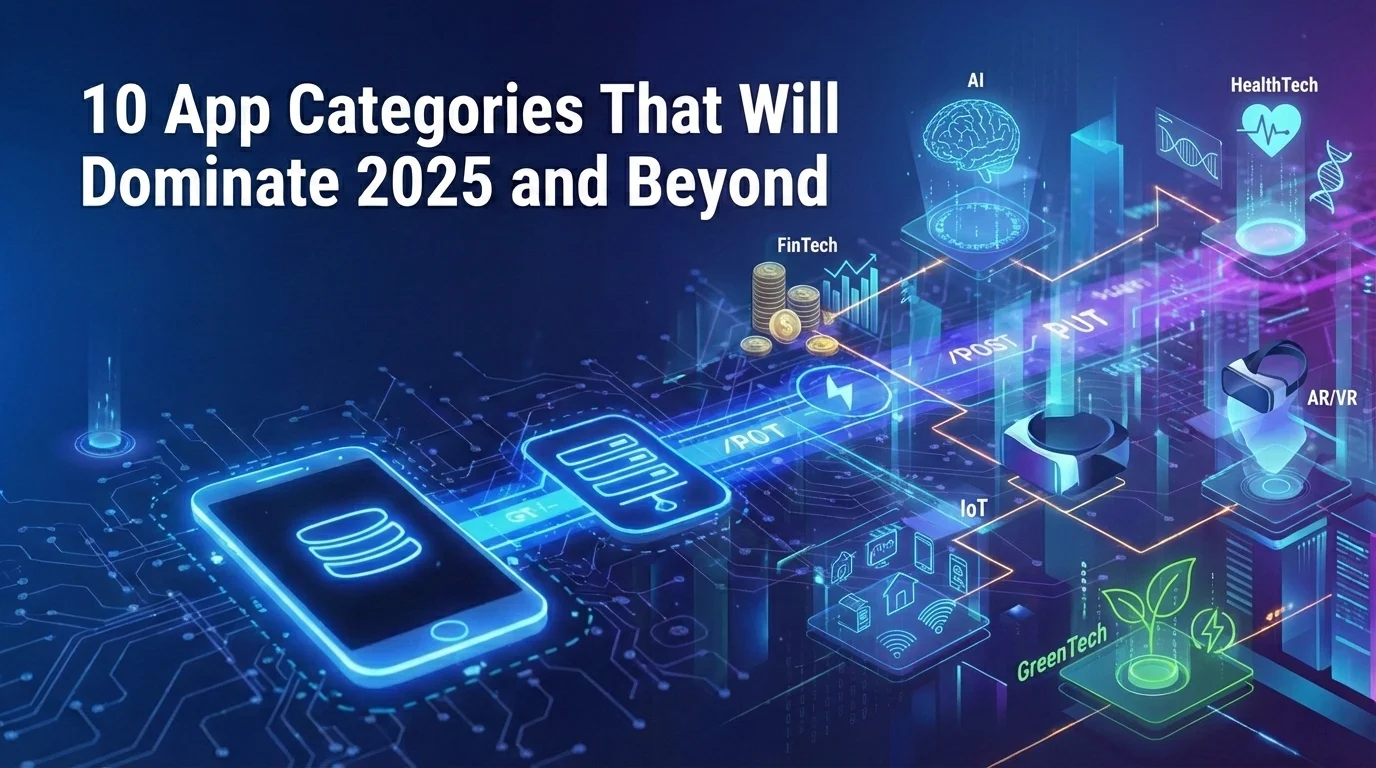
The mobile application market continues its explosive growth, driven by advancements in technology and an ever-increasing reliance on smartphones for daily life. As we look towards 2025 and beyond, a new wave of app categories is set to dominate, evolving from current trends and leveraging innovations like Artificial Intelligence (AI), 5G, Extended Reality (XR), and the Internet of Things (IoT).
These dominant categories are fundamentally reshaping how we work, manage our finances, consume entertainment, and care for our well-being. The future of mobile apps is defined by hyper-personalization, seamless cross device integration, and the simplification of complex tasks.
This upcoming exploration will delve into 10 App Categories that are poised for maximum growth, revenue generation, and user adoption, offering a roadmap for developers, investors, and entrepreneurs looking to capitalize on the next era of the mobile revolution. These categories reflect shifts in consumer behavior toward greater convenience, immersive experiences, and data driven intelligence.
The application landscape in 2025 and beyond is set to be dominated by categories that integrate advanced technologies, offer hyper personalization, and address the increasing consumer demand for convenience and digital-first services in critical areas of life.
1. Medical Apps
Medical apps are software applications designed for healthcare providers and patients, focusing on clinical tasks, disease management, and administrative efficiency. This category includes Electronic Health Records (EHR) access, clinical reference tools, diagnostic support utilizing AI, and dedicated remote patient monitoring platforms. Their core function is to facilitate professional healthcare delivery and management.
In 2025, these apps will dominate through their deep integration with Telemedicine and Artificial Intelligence (AI). AI will be used for rapid diagnostic assistance and personalized treatment planning, while telemedicine platforms will allow for remote consultations, significantly expanding patient access to specialists and follow-up care. This shift makes healthcare more efficient and geographically accessible.
The future of medical apps is inextricably linked to the Internet of Medical Things (IoMT). Apps will seamlessly connect with patient wearables and at-home medical devices (like smart glucose or blood pressure monitors) to provide real-time data to doctors. This continuous monitoring enables proactive management of chronic diseases, moving the healthcare model from reactive treatment to preventive, data-driven care.
2. Health and Wellness Apps
Health and wellness apps are consumer-focused tools designed to promote a healthier lifestyle through tracking, coaching, and mental support. They primarily cover fitness and exercise, diet and nutrition, sleep cycle monitoring, and mental health or meditation practices. Unlike medical apps, their focus is on general well-being, self care, and preventive health.
The dominance of these apps will be driven by a growing global awareness of the importance of holistic well-being, especially for mental health. Tools focusing on stress management, mindfulness, and therapy connection are seeing massive growth, moving beyond simple fitness tracking to address emotional and psychological needs. This is often enhanced by personalized coaching.
Advanced AI-driven personalization and deep integration with wearable devices are key growth drivers. Apps offer customized workout plans, nutritional advice, and sleep insights based on real time biometric data from smartwatches and fitness trackers. This tailored experience and the gamification of health goals will significantly boost user engagement and long term retention.
3. Grocery Apps
Grocery apps are mobile platforms that allow users to order food, household essentials, and fresh produce for delivery or in-store/curbside pickup (click-and-collect). They serve as the digital storefront for retailers and as the primary interface for third-party delivery services, streamlining the process of retail purchasing.
These apps will dominate the retail sector by prioritizing speed and convenience. The rise of “quick commerce” (Q-commerce) and ultra fast delivery models, often leveraging dark stores (delivery only micro warehouses), is setting new consumer expectations for fulfillment in minutes. Consumers are increasingly willing to pay for this immediate convenience.
The future of grocery apps will focus on hyper personalization and advanced logistics. AI will power predictive shopping lists and personalized discounts based on purchase history, reducing the effort required to place an order. Furthermore, sophisticated algorithms and real-time tracking will continually optimize delivery routes and inventory, ensuring maximum efficiency and minimal product waste.
4. Education and E-Learning Apps
Education and E-Learning apps (or EdTech) provide digital access to educational content, training courses, and skills development. They range from formal K-12 and university course delivery platforms to professional upskilling programs, language learning tools, and microlearning modules. Their primary goal is to democratize knowledge and make learning flexible.
EdTech apps are set to dominate by implementing AI-powered learning paths. AI and machine learning will analyze a student’s performance, identify knowledge gaps, and dynamically adjust the curriculum or practice questions to offer a truly personalized, adaptive learning experience. This model is significantly more effective than traditional one-size-fits-all digital courses.
Crucial trends include the mass adoption of microlearning that is helpful in delivering content in bite-sized, engaging segments and the integration of Gamification to boost motivation and retention. Furthermore, immersive technologies like Augmented Reality (AR) and Virtual Reality (VR) will be increasingly used to create engaging, hands on simulations for complex subjects, such as medical training or engineering.
5. Restaurant and Food Delivery Apps
These platforms connect customers with restaurants for the purpose of ordering food for delivery or takeout. They operate on models that can be aggregator-only (restaurants handle delivery) or full-service (the app manages the entire logistics chain), completely transforming the dining experience by bringing it to the consumer’s doorstep.
The market will continue its strong dominance through technological innovation that drives down delivery times and costs. Key growth factors include the expansion of ghost kitchens (delivery-only facilities that cut overhead) and the implementation of drone and autonomous delivery in densely populated areas, pushing the boundaries of fast service.
Competition will center on data-driven customer loyalty and seamless experiences. Apps are leveraging AI to provide hyper personalized recommendations, dynamic pricing, and subscription models that offer exclusive deals and free delivery. Integrated logistics and user-friendly interfaces with real time tracking ensure a predictable and high-quality service, securing consumer preference.
6. Dating Apps
Dating apps are social platforms designed to facilitate connections and relationships between users based on personal profiles, preferences, and geographical location. They allow users to browse potential matches, communicate via chat, and ultimately meet in person, serving as the modern, primary tool for meeting romantic partners.
The next generation of dating apps will be dominated by the ethical and sophisticated use of Artificial Intelligence. AI-powered matchmaking will move beyond superficial criteria, analyzing communication styles, interests, and emotional signals to suggest more compatible and higher quality matches, reducing ‘swipe fatigue.’
A major trend is the focus on safety, authenticity, and better “Pre-Date” experiences. Features like enhanced profile verification (via AI or video), in app video chat tools, and integration of ‘offline’ activities or events will reduce scamming and catfishing, fostering greater user trust and encouraging movement from digital chatting to real-world dates.
7. Finance Apps
Finance apps, or Fintech, encompass a broad range of applications that manage personal, investment, and business finances. This includes digital wallets, peer-to-peer (P2P) payment systems, budgeting and expense tracking tools, mobile banking, and investment/stock trading platforms. Their goal is to make financial services instant, borderless, and user-centric.
Fintech’s dominance stems from its use of Open Banking and AI-driven personalization. Apps are able to securely aggregate data from multiple bank accounts (with user consent), providing a holistic view of personal finance and offering tailored, proactive financial advice, budgeting recommendations, and investment insights.
The future is focused on embedding financial services seamlessly into everyday life. This includes greater adoption of digital currencies, super-app models that combine payments, trading, and lending, and the use of Blockchain for secure, transparent transactions. The emphasis will remain on robust security protocols like biometric authentication and encryption to maintain user trust.
8. Pet Apps
Pet apps are niche but rapidly growing platforms dedicated to the care, health, and well being of companion animals. Their functionality includes veterinarian telemedicine/appointment booking, pet-sitter and walker services, training guides, and integrating with smart pet feeders or GPS trackers.
The growth is fueled by the humanization of pets, where owners increasingly treat their animals as family members and demand high-tech, convenient services. Apps that centralize all pet-related needs from health records and medication reminders to social networking for owners that provide a crucial utility that caters to this high level of care.
A key development is the integration of wearable technology and AI for pet health monitoring. Smart collars and trackers collect real-time data on a pet’s activity, sleep, and vital signs. Apps analyze this data to alert owners to potential health issues early, offering predictive health management and personalized nutrition recommendations based on breed and activity level.
9. Ecommerce Apps
Ecommerce apps are mobile shopping platforms that facilitate the buying and selling of goods and services online, outside of the grocery category. They represent the digital storefront for retailers and marketplaces, driving sales through mobile-first design, secure payment gateways, and sophisticated inventory management.
These apps will dominate by creating immersive and hyper-personalized shopping experiences. AI is vital for offering highly accurate product recommendations, virtual try-ons using Augmented Reality (AR), and personalized dynamic content that changes based on a user’s real-time browsing behavior, vastly improving conversion rates and customer satisfaction.
The long-term trend involves the rise of Agentic Commerce and the integration of social elements. Agentic systems use AI to act on behalf of the customer (e.g., automatically placing a recurring order for household items). Furthermore, shoppable video and deep integration with social media platforms (Social Commerce) are turning browsing into a seamless purchasing journey.
10. Internal Communication and Employee Apps
Internal Communication and Employee Apps are enterprise platforms designed to streamline information flow, collaboration, and human resources functions within a company. They replace fragmented email chains and intranet portals by offering features like company news feeds, chat/messaging, digital HR services (time off, payroll), and professional development modules.
These apps are essential for managing the hybrid and remote workforce model. They ensure every employee, from the corporate office to the frontline, receives personalized, relevant, and timely information regardless of their location or job function. This capability is critical for maintaining corporate culture, strategic alignment, and overall employee engagement.
The future of these applications is focused on boosting organizational velocity through data-driven communication. By analyzing which information employees access and ignore, AI helps leadership optimize communication channels, reduce digital “noise,” and deliver targeted, actionable messages that turn strategy into coordinated action faster, directly impacting productivity and business outcomes.
Conclusion:
The preceding discussion outlines how the future of the app market will be dominated by solutions that are deeply integrated, highly personalized, and leverage cutting edge technologies like AI, AR/VR, and IoT. The 10 categories from the clinical efficiency of Medical Apps to the convenience of Food Delivery and the personalization of Ecommerce which demonstrate a shift where mobile technology is no longer just a convenience but a fundamental necessity for health, finance, education, and daily life.
Meanwhile, the successful apps of 2025 and beyond will be those that effectively use data to anticipate user needs, simplify complex tasks, and seamlessly integrate into the user’s physical and digital existence.